Who's Walking Who? The Hilarious Truth About Leash Pulling (And How to Finally Win)
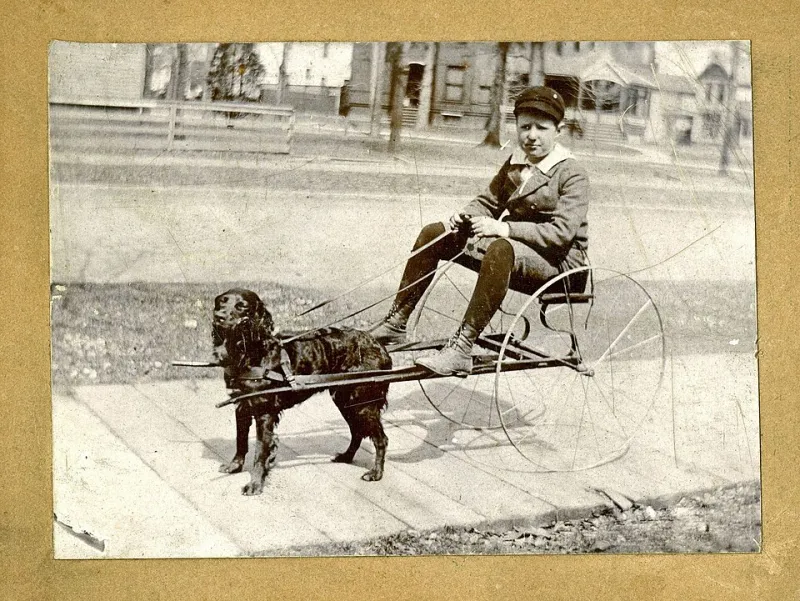
Photo: Coon, Julia Jay, 1871-1940, Public domain, via Wikimedia Commons
Let's paint a picture. It's a crisp Tuesday morning. You laced up your sneakers, grabbed a coffee, clipped on the leash, and stepped outside with every intention of enjoying a peaceful neighborhood stroll. Thirty seconds later, you're being dragged past the Hendersons' mailbox at a speed that would impress a sled dog. Your coffee is gone. Your shoulder hurts. And your 22-pound Beagle is approximately fifteen feet ahead of you, nose glued to the sidewalk, completely unbothered.
Congratulations. Your dog is walking you.
You are not alone. In fact, leash pulling is one of the most common complaints among dog owners across the country — right up there with counter-surfing and the mysterious disappearance of socks. But before you resign yourself to a lifetime of being a human anchor, let's dig into why this keeps happening and, more importantly, how you can actually do something about it.
Why Dogs Pull: It's Not Personal (Mostly)
Here's the thing about dogs: they are not being defiant, dominant, or dramatic when they lunge forward on the leash. They're being dogs. Their entire sensory world is built around smell, and the average neighborhood sidewalk is basically a Netflix binge of olfactory content. That fire hydrant? A community bulletin board. That patch of grass by the curb? A gossip column. Every sniff is a story, and your dog wants to read every single one.
Adding to that, dogs naturally move faster than humans. Your leisurely pace is their slow-motion montage. When they pull forward and you follow — even reluctantly — they learn a beautifully simple lesson: pulling works. It gets them to the good stuff faster. And once that behavior is reinforced, it becomes a habit that feels as natural to them as breathing.
So no, your dog doesn't think he's the boss. He just figured out a system that gets results. Honestly? Respect the hustle.
The Myths Making Things Worse
Before we get to solutions, let's bust a few myths that might be standing in your way.
Myth #1: A tighter grip fixes everything. Nope. Holding the leash tighter doesn't teach your dog anything except that you have a strong grip. It doesn't communicate stop pulling — it just makes both of you miserable.
Myth #2: Your dog knows better and is choosing to ignore you. Dogs don't generalize well. Just because your dog sits perfectly in the living room doesn't mean he's translating that obedience to a distraction-filled outdoor environment. Outdoor training is a whole different class.
Myth #3: Retractable leashes solve the problem. Retractable leashes are the participation trophies of dog walking gear. They give your dog the impression that pulling = more leash = freedom. You're essentially rewarding the exact behavior you're trying to stop.
Step-by-Step: How to Actually Take Back the Walk
Okay, enough commiserating. Here's what works — and yes, it requires consistency, patience, and probably a good pair of shoes.
Step 1: Start in a Boring Place
Don't try to train leash manners on your usual route where every squirrel is a five-alarm distraction. Start in your driveway, your backyard, or a quiet parking lot. Low stimulation = better focus. Once your dog can walk nicely in a boring environment, you level up to busier spaces.
Step 2: The Stop-and-Wait Method
This one sounds too simple to work, but it does. The moment your dog hits the end of the leash and pulls, you stop. Completely. You become a statue. No yanking, no scolding — just stillness. Wait until your dog releases the tension on the leash (even slightly), then praise and move forward. You're teaching a clear cause-and-effect: slack leash = we go, tight leash = we go nowhere.
Fair warning: your first few walks using this method may cover approximately one city block in forty-five minutes. Bring snacks.
Step 3: The Change-of-Direction Game
When your dog pulls ahead, turn and walk the other direction — calmly and without drama. Your dog suddenly finds himself following you instead of leading. Repeat every time he surges forward. This keeps him tuned into your movements rather than charging on autopilot. It also makes you look absolutely unhinged to your neighbors, but that's a small price to pay.
Step 4: Reward the Right Stuff
Carry high-value treats — we're talking real chicken, cheese, or whatever makes your dog's eyes go wide. When your dog is walking beside you with a loose leash, mark it with a cheerful "yes!" and reward. You're building a new association: staying close to you is the most profitable place to be. Over time, this becomes habit.
Step 5: Consider Your Gear
A front-clip harness (like the Ruffwear Front Range or the PetSafe Easy Walk) clips at the chest rather than the back, which naturally redirects a pulling dog back toward you instead of letting them power forward. It's not magic, but it's a genuinely useful tool while you're working on training. Think of it as training wheels — helpful in the short term, not a permanent substitute for actual skills.
The Long Game
Leash training isn't a one-week fix. It's a habit you build over weeks of consistent, short sessions. Ten focused minutes beats one chaotic hour every time. And here's the silver lining: the process of teaching your dog to walk nicely actually deepens your bond. You're communicating, cooperating, and learning each other's rhythms.
Also, when it finally clicks — when you and your dog are strolling side by side, loose leash swinging, both of you relaxed — it feels genuinely triumphant. Like you've earned something together.
Your dog still has opinions about which fire hydrant deserves a sniff. That part won't change. But at least you'll both be walking toward it at your pace.
And honestly? That's a win worth celebrating — maybe with a treat for both of you.