Your Dog Is an Absolute Menace at Home and a Literal Saint at the Groomer — Here's the Infuriating Reason Why
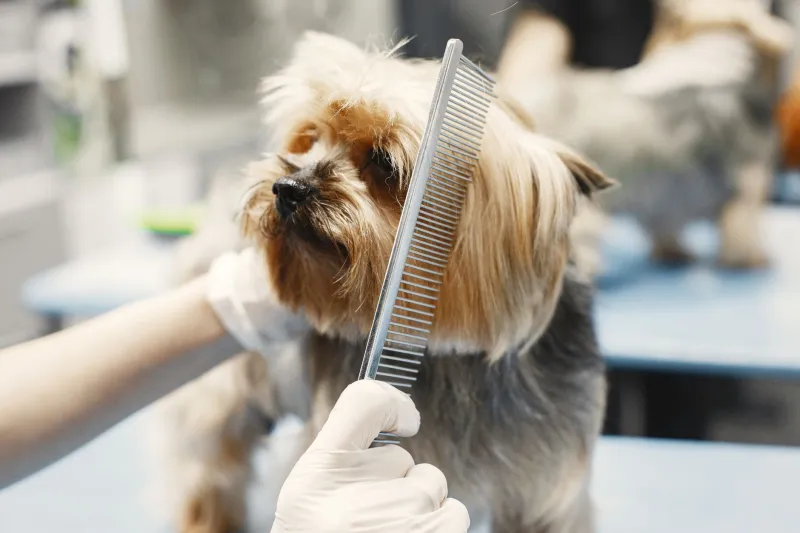
You have watched your dog — the same dog who turned bathtime into a full hostage negotiation last Tuesday — trot calmly into a grooming salon, hop onto a steel table, and sit like a distinguished British lord while a complete stranger blow-dries his ears. No drama. No death spiral. No existential howling.
And then he comes home, sees you holding a brush, and acts like you just announced a tax audit.
Welcome to one of dog ownership's most deeply personal betrayals. You feed this animal. You pay his vet bills. You let him sleep diagonally across your $300 mattress. And yet, somehow, a person he sees four times a year commands more respect than you do on your best day.
The good news: you're not imagining it, you're not alone, and it's not entirely your fault. The slightly uncomfortable news: it's mostly your fault. But in a fixable way! Probably.
The Jekyll-and-Hyde Dog Is a Real Psychological Phenomenon
Dogs are, at their core, incredibly perceptive social animals. They read energy, context, and behavioral cues with a sophistication that would embarrass most humans in a job interview. What your dog is doing when he transforms into a chaos goblin at home and a zen master at the groomer isn't random — it's a calculated (if unconscious) response to the emotional environment around him.
At home, you are a known quantity. Your dog has spent months or years cataloging every micro-expression, voice fluctuation, and body language tell you have. He knows when you're bluffing. He knows that when you say "sit" for the fourth time in a row, your voice gets slightly higher and your shoulders drop — and that nothing actually happens next. You are, behaviorally speaking, a open book written in large font.
The groomer, on the other hand, is a mystery. A confident, efficient, no-nonsense mystery who moves with purpose and doesn't negotiate.
What Groomers Are Actually Doing Differently
Professional groomers and trainers share a handful of behavioral habits that most pet owners accidentally skip — not out of laziness, but because nobody told them these things matter.
They don't repeat themselves. A groomer says something once — through a physical cue, a gentle repositioning, a calm touch — and then follows through. There's no "come on, buddy, pleeeease hold still" energy. There's just quiet expectation. Dogs respond to that clarity like it's a cheat code.
They keep their own emotions out of it. Here's the hard truth: when you're stressed about bathtime, your dog is stressed about bathtime. Dogs sync emotionally with their owners in a process researchers call emotional contagion — basically, your anxiety becomes their anxiety, which becomes your frustration, which becomes their panic, which becomes the full bathroom flood situation you're currently trying to forget. Groomers show up neutral. They're not emotionally invested in whether your Goldendoodle cooperates. That detachment is actually a superpower.
They use physical structure. A grooming table, a gentle restraint loop, a specific positioning — these aren't just tools for efficiency. They create a physical context that tells the dog "this is a working situation." Dogs are heavily context-dependent learners. The same dog who ignores a brush in the living room may tolerate it completely differently when the physical setup signals something different is happening.
They keep sessions short and purposeful. Nobody at the grooming salon is dragging things out while also checking their phone and watching TV. The interaction is focused, paced, and goal-oriented. Dogs actually do better with that kind of structure than with the wandering, interrupted grooming sessions most of us attempt on a Sunday afternoon.
The "Stranger Respect" Factor Is Real (And Annoying)
There's also a social hierarchy element at play that's genuinely irritating to confront. In your dog's mental model of the world, you are family — which means you're safe, predictable, and, frankly, a little easy. Strangers, especially calm and confident ones, trigger a slightly more alert and deferential response. It's not that your dog likes the groomer more. It's that the groomer hasn't yet been fully categorized as someone whose rules can be tested.
This is the same reason your dog listens to your house guests, performs every trick he knows for your father-in-law, and then comes back to you and refuses to sit despite having done it forty times in the last ten minutes. Familiarity, in the dog world, breeds creative rule-bending.
How to Steal the Groomer's Authority Without Going to Cosmetology School
The genuinely useful part of all this is that none of these groomer habits require professional training to replicate. They require awareness and consistency, which are free and available to everyone.
Create a physical grooming context. Pick a specific spot — a mat, a table, a particular area of the bathroom — and use it exclusively for grooming. Keep the setup consistent. Over time, the location itself will cue your dog that this is a working moment, not playtime.
Say it once, then act. If you ask your dog to sit before a brushing session, ask once. If he doesn't respond, calmly and gently guide him into position. Then proceed. No repetition, no pleading, no frustrated sighing. The goal is to teach him that your cues mean something the first time.
Check your energy before you start. This one's genuinely hard, but it matters enormously. If you're already bracing for a fight, your dog will feel it before you've even picked up the brush. Take a breath. Act like you're already bored by how smoothly this is going to go. Fake it until your dog believes it.
Keep it short on purpose. Especially if your dog has a history of grooming meltdowns, start with sessions that end before things fall apart. Two minutes of calm brushing followed by a treat and a release is worth ten times more than a twenty-minute struggle session that ends with both of you needing a nap.
The Uncomfortable Takeaway
Your dog is not trying to humiliate you, even though the results are humiliating. He is responding, completely logically, to the behavioral patterns you've established together over months or years. The groomer isn't magic. She's just consistent, calm, and unbothered — and those qualities, it turns out, are deeply persuasive to a species that reads energy for a living.
The good news is that you can build that same dynamic. It takes patience, repetition, and the willingness to stop negotiating with a twelve-pound creature who eats mulch for entertainment.
But hey — if all else fails, there's always the grooming salon. At least one of you will leave looking great.