Your Dog Rejected the $60 Artisan Treats and Chose a Stick: A Completely Unhinged Cost-Per-Joy Breakdown
Let's set the scene. It's a crisp Saturday morning. You've just returned from a boutique pet supply store — the kind that smells like lavender and quiet financial regret — with a small paper bag containing twelve dollars' worth of freeze-dried wild-caught salmon bites, a sixteen-dollar pouch of bison liver crumbles, and a thirty-two-dollar canister of "small-batch, probiotic-infused, grain-free training rewards" that the store associate described as "basically charcuterie for dogs."
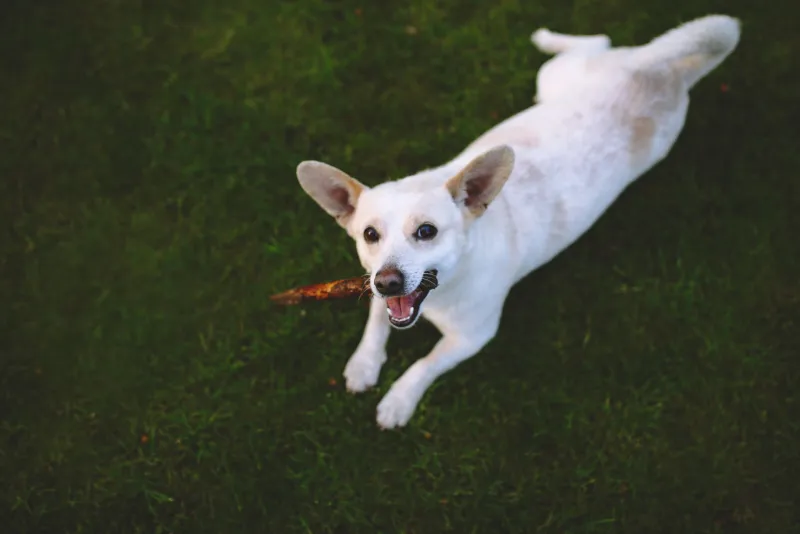
You open the back door with the energy of a parent presenting a birthday cake. Your dog sniffs the air, looks directly at you, trots past your outstretched hand, and picks up a stick he has apparently been saving since the Obama administration.
He is vibrating with joy.
You are vibrating with something else entirely.
Welcome to the absurd, beautiful, completely irrational economics of making your dog happy.
The Numbers Don't Lie (But They Do Laugh at You)
Let's actually run this analysis, because we are adults who deserve to understand exactly how badly we've been played.
The $60 Treat Haul:
- Freeze-dried salmon bites: $12 for approximately 40 pieces → $0.30 per treat
- Bison liver crumbles: $16 for roughly 60 pieces → $0.27 per treat
- Probiotic charcuterie rounds: $32 for about 50 pieces → $0.64 per treat
- Average cost per moment of mild interest from your dog: $0.40
- Seconds of sustained engagement per treat: approximately 3
- Cost per second of joy: $0.13
The Stick:
- Acquisition cost: $0.00
- Source: Your backyard, a park, the general concept of Earth
- Seconds of sustained engagement: 47 minutes and counting
- Cost per second of joy: $0.00
- Your dog's expression while holding it: Absolute, uncut euphoria
The math is humiliating. The stick wins by every conceivable metric.
Why Your Dog Is Basically a Minimalist Philosopher
Here's the thing — your dog isn't being difficult. He's being deeply, almost spiritually consistent with who he is. Dogs are sensory creatures. A stick isn't just a stick. It's a layered, complex object that smells like dirt, bark, beetle activity from three weeks ago, and whatever the neighbor's dog was doing near the fence on Tuesday. It has texture. It makes noise. It bends slightly when chewed, offering resistance feedback that no treat pouch has ever replicated.
Your $64 haul of artisan protein bites? Gone in three seconds. No texture journey. No scent narrative. Just a brief moment of flavor and then nothing but the hollow echo of your credit card statement.
The stick is an experience. The treat is a transaction.
Dogs, as it turns out, prefer experiences. They've basically been living the advice in every wellness podcast since 2018, and they didn't even need the podcast.
The Full Taxonomy of Zero-Dollar Dog Joys
The stick is merely the most iconic entry in a long, distinguished catalog of things your dog loves more than anything you've ever purchased for him. A brief survey:
- The Empty Water Bottle: Crinkles. Rattles. Costs nothing. Your dog will protect it like it's the Declaration of Independence.
- Your Dirty Laundry: Specifically your gym socks. Specifically the ones you wore twice. The scent profile is apparently extraordinary.
- A Cardboard Box: You spent $180 on an orthopedic memory foam dog bed. The box it came in has been his preferred napping spot for six weeks.
- A Pinecone: Technically spikier and less ergonomic than the stick. Does not matter. Your dog is obsessed.
- That One Specific Spot in the Yard: No toys, no treats, no stimulation visible to the human eye. Your dog circles it and sniffs it for twenty minutes every single morning like he's conducting an archaeological dig.
- Your Attention: Free. Infinitely renewable. Somehow still underused.
Should You Just... Stop Buying Treats?
No. Absolutely not. Put that thought away immediately.
Treats serve a real purpose — they're essential for training, useful for reinforcing good behavior, and important for your dog's nutrition when chosen well. The point isn't that treats are a scam. The point is that you've been measuring your dog's happiness in dollars, and your dog has never once cared about your budget.
What you can do is recalibrate your expectations. Stop treating every treat purchase like it should generate visible gratitude. Your dog is not going to look at you with tears in his eyes because you sprung for the grain-free bison option. He'll eat it, look around for more, and then go find a stick.
And that's fine. That's perfect, actually.
How to Redirect the Stick Obsession Without Destroying His Soul
If the stick has become a safety concern — your dog is eating it rather than chewing it, or he's dragging home branches the size of a kayak — here are some genuinely useful redirects that won't crush his spirit of discovery:
1. Offer a "legal stick" alternative. Bully sticks, natural wood chews like Himalayan yak chews, or coffee wood chews give him the texture and resistance he's chasing without the splinter risk. It's basically a stick that went to finishing school.
2. Make the swap, don't just steal. If your dog has a stick and you need to take it, trade him for something — a treat, a toy, anything. Snatching it creates anxiety and resource guarding. The trade teaches him that giving things up leads to good outcomes. He'll still find another stick immediately, but at least the handoff was civilized.
3. Let him sniff before he chews. A lot of the stick's appeal is olfactory. If you give him a few minutes to sniff it thoroughly before redirecting, you're honoring the sensory experience he was after. He may be more willing to move on once the sniff investigation is complete.
4. Channel the energy into sniff games. Hide treats in the grass, try a snuffle mat, or scatter kibble in a pile of leaves. You're giving him the same unpredictable, sensory-rich experience the stick offers — just in a form that won't require a vet visit.
The Real Takeaway Here
Your dog doesn't need you to spend $60 to be happy. He needs you to take him outside, let him sniff weird things, and occasionally throw something for him to chase. He needs your time more than your Amazon cart.
The $60 treats aren't wasted — use them for training, use them as high-value rewards for the big moments, use them when you need to compete with a truly compelling distraction. But stop expecting them to impress him.
The stick already did that. The stick did it for free.
Maybe the real lesson here isn't about dogs at all. Maybe it's about the rest of us, who keep buying things to feel something, while the dog has already figured out that a gnarly piece of wood from the backyard is basically all you need.
Or maybe your dog is just weird. Both things can be true.
Either way, he seems pretty happy. The stick says so.